








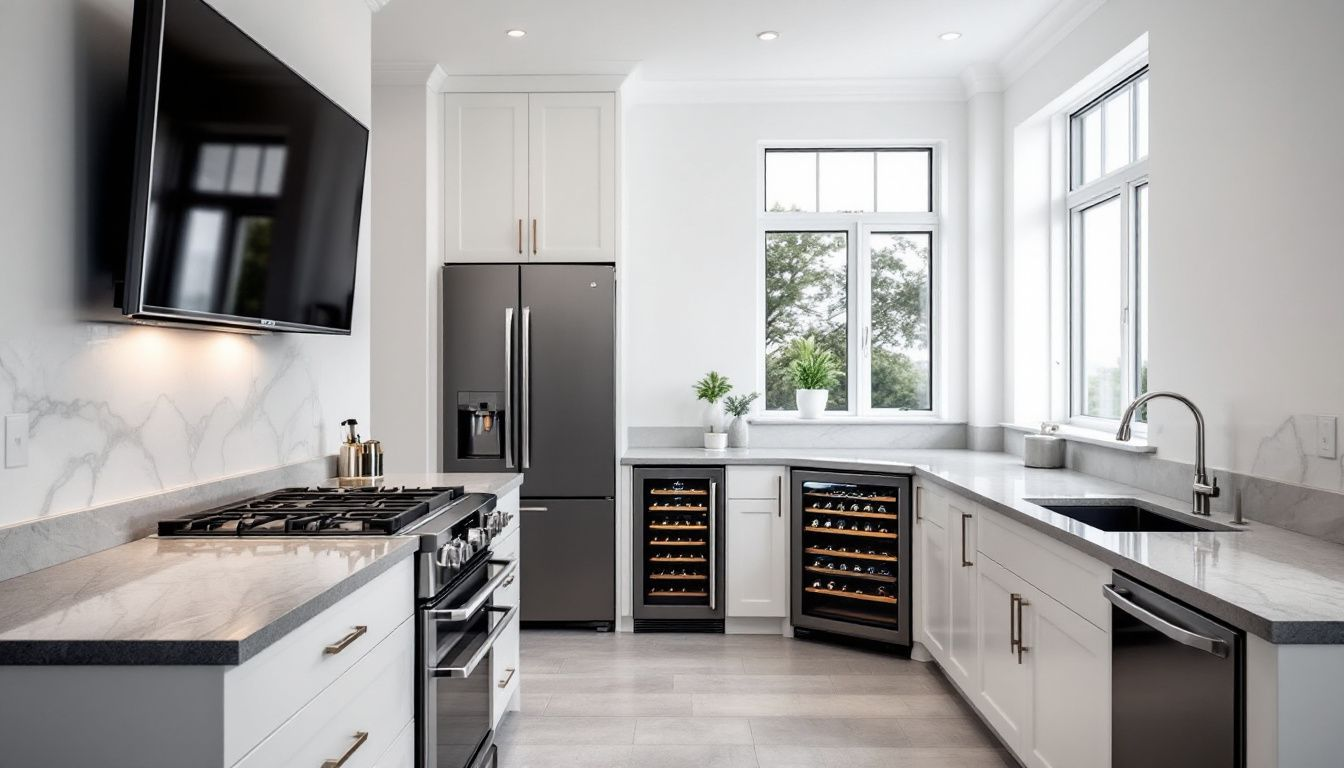
Choosing Household Appliances for a Singapore Home: A Practical Guide to Cost, Size and Efficiency
14 Views
Household appliances influence daily convenience, electricity consumption and the amount of usable space available in a home. A refrigerator that is too large, a washing machine with unnecessary features or an air-conditioner that is poorly matched to a room can create avoidable costs for years.
For Singapore homeowners, selecting appliances is best approached as a practical purchasing exercise rather than a race to acquire the newest technology. By considering household routines, installation requirements, energy efficiency and maintenance needs, buyers can choose equipment that supports everyday living without overspending.
Match Appliance Capacity to Household Needs
The most suitable appliance is not necessarily the largest or most powerful model. Capacity should reflect the number of household members, typical usage and available installation space.
For refrigerators, consider how frequently the household cooks, how much fresh food it stores and whether bulk grocery shopping is common. An oversized refrigerator may consume more space than necessary, while an undersized model can make food storage inconvenient.
Washing machine capacity should reflect laundry volume and frequency. A larger drum may be useful for households that regularly wash bulky items, but it may offer limited practical benefit to someone who does smaller loads.
Dishwashers, dryers and other appliances should be assessed in the same way. Consider how often they will be used and whether their functions solve a genuine household need.
Before buying, measure the intended installation area and check the manufacturer’s recommended clearances. Allow enough room for doors, drawers, ventilation and servicing access.
Compare Energy Consumption Before Purchasing
Appliances can contribute significantly to recurring household electricity expenses, particularly equipment used frequently or for long periods.
Singapore consumers can consult the National Environment Agency’s energy-efficiency information and applicable appliance labelling schemes when comparing eligible products. Check the label and product specifications for the relevant model rather than relying only on general claims about energy savings.
Where comparable energy information is available, consider the estimated consumption alongside the purchase price. A more efficient model may cost more initially but could offer savings over its useful life, depending on usage and electricity tariffs.
Read More: Why Storage Space Deserves More Attention in Singapore Property Searches
Air-conditioning deserves particular attention because its energy use depends on factors such as room size, temperature settings, operating hours and equipment efficiency. Correct installation and regular maintenance also influence performance.
For prospective homeowners researching Solano Grand in Bukit Panjang, estimating appliance requirements before shopping can help align the initial furnishing budget with likely electricity and maintenance costs.
Check Installation and Compatibility Requirements
An appliance may appear suitable in a showroom but prove difficult to install if the home’s dimensions or service connections do not match its requirements.
Before ordering, confirm the available space, door clearances, electrical provisions and any necessary water supply or drainage connections. Check whether delivery teams can move the appliance through the entrance, corridors and other access points.
Some appliances require dedicated electrical circuits or installation by appropriately qualified professionals. Do not assume that an existing socket or connection is suitable simply because it is nearby.
For air-conditioners, confirm the property’s existing provisions and the applicable installation requirements before selecting equipment. In a condominium or executive condominium, certain works may be subject to development-specific procedures.
If the appliance requires modifications to cabinetry or plumbing, coordinate these changes before delivery to avoid delays and additional costs.
Look Beyond the Purchase Price
The total cost of owning an appliance includes more than its retail price. Delivery, installation, accessories, extended warranties, maintenance and eventual replacement can all affect value.
Compare quotations carefully and check what is included. One retailer may include standard installation, while another may charge separately for additional work or removal of an old appliance.
Warranty conditions also deserve attention. Review the coverage period, exclusions, servicing arrangements and whether registration is required. An extended warranty should be evaluated according to its price, coverage and the risks it actually addresses.
Avoid paying extra for features that are unlikely to be used. Automated programmes, app connectivity and specialised settings may be useful for some households but unnecessary for others.
Homebuyers considering Wynwood Grand in Woodlands can prioritise essential appliances first and postpone optional purchases until the household’s routines become clearer.
Consider Noise and Everyday Convenience
Appliance noise can affect comfort, particularly in compact homes where kitchens, living areas and bedrooms are relatively close together.
Check published noise information where available and consider when the equipment will operate. A washing machine used late in the evening may warrant different priorities from one used only during daytime hours.
Controls should also be easy for household members to understand. Complicated settings can make an appliance less convenient, even if its specifications appear impressive.
For frequently used equipment, consider how easily filters, trays and other removable components can be cleaned. Accessible maintenance points can make routine care less time-consuming.
Plan for Maintenance and Replacement
Follow the manufacturer’s maintenance instructions, including recommended filter cleaning, ventilation clearances and servicing intervals. Keep manuals, receipts and warranty information in an organised location.
Watch for unusual noises, leaks, reduced performance or repeated faults. Addressing problems promptly may prevent further damage, although repairs should be undertaken by suitable professionals when necessary.
When replacing an appliance, check the available recycling or disposal arrangements instead of leaving the old unit in an unauthorised area. Singapore has designated channels for certain electrical and electronic waste, and the appropriate option depends on the item.
Buy for Practical Value, Not Just Features
A well-chosen appliance should suit the household’s needs, fit the property correctly and remain manageable to operate and maintain.
By comparing capacity, energy information, installation requirements and lifetime costs, Singapore homeowners can make more informed purchasing decisions. A carefully planned selection can improve everyday convenience while keeping household expenditure under better control.
