





How Contemporary Residential Design Meets Changing Lifestyle Needs
193 Views
Residential design has evolved alongside the way people live, work, and spend their time. Modern households may combine remote work with office-based employment, prioritise wellness and outdoor recreation, or require spaces that can adapt as family circumstances change. As a result, contemporary residential developments increasingly focus on flexibility, functionality, connectivity, and comfort rather than relying solely on traditional room arrangements.
For homebuyers, understanding these design trends can help identify properties that are better suited to both current routines and future lifestyle changes.
Flexible Spaces Support Different Routines
One of the most important features of contemporary residential design is flexibility. Rooms that can serve multiple purposes allow homeowners to adapt their homes as their needs evolve.
A spare room may function as a home office today and become a nursery, guest room, or hobby space later. Flexible layouts can therefore make a property more useful over a longer period of ownership.
Work-From-Home Requirements Have Changed Interior Planning
Remote and hybrid working have increased the importance of having suitable areas for focused work. A practical home office does not necessarily require a large dedicated room.
Read More: Singapore EC Lifestyle Planning: Designing Life During MOP
A quiet corner, adaptable study area, or separate room can provide enough space for a desk and work equipment while keeping professional activities separate from relaxation areas. Good natural lighting, ventilation, and access to reliable connectivity can further improve the working environment.
Open-Plan Living Creates Greater Flexibility
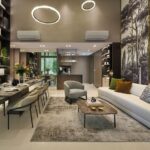
Open-plan kitchens and living areas remain popular because they can make homes feel more spacious and encourage interaction between household members.
An open arrangement can also support different activities at the same time. Someone may prepare a meal while others relax, study, or socialise nearby. However, buyers should consider whether the layout provides enough separation for privacy and focused activities when needed.
Storage Has Become More Important
Modern households often own a wide range of devices, equipment, clothing, recreational items, and household goods. Well-planned storage can help prevent these belongings from overwhelming living areas.
Built-in wardrobes, kitchen cabinetry, utility spaces, and adaptable storage areas can contribute significantly to everyday convenience. Buyers should consider not just how much storage exists but whether it is located where it is most useful.
Technology Is Becoming Part of Residential Design
Smart features are increasingly integrated into contemporary homes. Digital access systems, smart lighting, climate controls, security features, and home automation can provide additional convenience.
Technology is most useful when it simplifies everyday tasks rather than adding unnecessary complexity. Buyers should consider reliability, ease of use, compatibility, and maintenance when assessing smart-home features.
Wellness Is Influencing Residential Planning
Modern lifestyles have increased awareness of the importance of exercise, relaxation, and access to nature. Residential developments are responding with gyms, swimming pools, landscaped gardens, walking paths, yoga areas, and outdoor recreation spaces.
Developments such as The Serra Residences demonstrate why lifestyle facilities can form an important part of contemporary residential planning.
Greenery Connects Homes With Nature
Urban residents often value opportunities to spend time around greenery. Landscaped gardens, planted walkways, trees, terraces, and outdoor communal areas can provide a sense of connection with nature.
Projects such as Dunearn Green highlight how landscaping can complement architecture and create more attractive outdoor environments for residents.
Outdoor Spaces Can Extend Living Areas
Balconies, terraces, private gardens, and communal outdoor spaces can provide additional areas for relaxation, dining, gardening, or recreation.
The usefulness of an outdoor space depends on factors such as size, privacy, shade, orientation, and accessibility. Buyers should consider how they would realistically use these spaces rather than treating them simply as visual features.
Family Needs Are Becoming More Diverse
Contemporary households come in many forms, including singles, couples, multigenerational families, and households with children or elderly relatives.
Flexible residential design can accommodate these different arrangements. Multiple bedrooms, adaptable common areas, accessible bathrooms, and practical circulation can make a home easier to adjust as family structures change.
Accessibility Supports Different Stages of Life
Universal and inclusive design is increasingly relevant to modern housing. Step-free access, lifts, wide circulation routes, accessible bathrooms, and convenient facility layouts can make homes easier to use for residents with different mobility requirements.
These features can also benefit families with young children, people carrying groceries, and residents experiencing temporary mobility limitations.
Kitchen Design Reflects Changing Habits
The kitchen continues to play an important role in residential life, but its function has expanded beyond food preparation. It can serve as a social space, work area, or informal gathering point.
Contemporary kitchens may therefore prioritise efficient storage, practical work surfaces, integrated appliances, and connections to dining and living spaces. Buyers should assess whether the kitchen matches their actual cooking and entertaining habits.
Privacy Remains Important
While open layouts encourage interaction, residents also need places where they can work, rest, or spend time alone.
Contemporary design increasingly seeks a balance between openness and privacy. Bedroom positioning, acoustic separation, room dividers, balconies, landscaping, and flexible partitions can all help create different levels of privacy within the home.
Natural Light and Ventilation Improve Comfort
Modern design places considerable emphasis on creating comfortable indoor environments. Window placement, building orientation, room arrangement, and appropriate spacing between buildings can influence natural light and airflow.
In Singapore’s climate, ventilation can be particularly relevant to everyday comfort. Buyers should assess how rooms receive daylight and how effectively air can circulate through the property.
Connectivity Is Part of Modern Living
Residential design is increasingly connected to the wider neighbourhood. Easy access to public transport, schools, healthcare facilities, shopping, dining, parks, and workplaces can support diverse lifestyles.
A well-designed home can therefore benefit from its surrounding environment as much as from its internal features. Strong neighbourhood connectivity can provide residents with more options without requiring extensive travel.
Shared Facilities Support Social Lifestyles
Contemporary condominiums often include communal spaces designed for social interaction. Function rooms, lounges, landscaped gardens, barbecue areas, pools, and recreational facilities can provide places for residents to meet and spend time together.
These facilities can be particularly useful in urban environments where private living spaces may be relatively compact.
Sustainability Is Increasingly Relevant
Environmental considerations are becoming more important in residential planning. Energy-efficient systems, water-saving features, greenery, shading, natural ventilation, and sustainable landscaping can contribute to more responsible development.
For homeowners, these features can also influence long-term operating efficiency and comfort. Buyers should examine the practical benefits of sustainability measures rather than focusing only on labels or marketing terminology.
Design Should Anticipate Future Changes
A contemporary home should ideally remain useful even when the resident’s lifestyle changes.
Someone may begin working from home, start a family, require additional storage, or change their recreational interests. Flexible rooms and adaptable layouts can make it easier to accommodate these changes without requiring major alterations.
Common Areas Are Evolving Too
Changes in lifestyle are not limited to private apartments. Residential developments are also adapting shared spaces to reflect modern needs.
Co-working areas, outdoor lounges, wellness facilities, children’s spaces, parcel collection areas, and flexible event spaces can provide practical services that complement private homes.
Convenience Influences Residential Design
Modern homeowners often value solutions that reduce unnecessary effort. Well-positioned lifts, sheltered pathways, parcel facilities, visitor management systems, accessible parking, and convenient waste collection can all improve everyday routines.
These features may not be as visually prominent as architectural details, but they can have a significant impact on the practical experience of living in a development.
What Buyers Should Look For
When assessing contemporary residential design, buyers can consider:
- Flexible room arrangements
- Home-working potential
- Storage capacity
- Kitchen functionality
- Natural light and ventilation
- Smart-home features
- Outdoor spaces
- Greenery and landscaping
- Wellness facilities
- Accessibility
- Privacy and acoustic separation
- Sustainable design features
- Shared communal spaces
- Connectivity to the wider neighbourhood
A physical viewing is particularly useful because it allows buyers to understand how these elements work together rather than evaluating them individually.
Designing Homes for Real Life
Contemporary residential design is increasingly focused on the realities of modern urban living. Homes need to support work, relaxation, family activities, social interaction, recreation, and personal time, sometimes within the same space.
The strongest designs therefore prioritise adaptability rather than following a single rigid concept of how a home should be used. Flexible layouts, useful storage, comfortable shared spaces, technology, greenery, and strong connectivity can all contribute to this adaptability.
Ultimately, contemporary residential design is about creating homes that respond to changing expectations. A property that works well today and can adjust to tomorrow’s needs may provide greater long-term value for homeowners.
By looking beyond visual appeal and examining functionality, flexibility, comfort, technology, sustainability, and neighbourhood connectivity, buyers can identify residential environments that are better equipped for the evolving realities of modern life.
